Can’t quite master a traditional plank yet? Or does it leave your back screaming? The knee plank is your perfect starting point! This modified version allows you to build a strong core and back with less strain, making it ideal for beginners or those with lower back issues.
What is the Knee Plank Exercise?
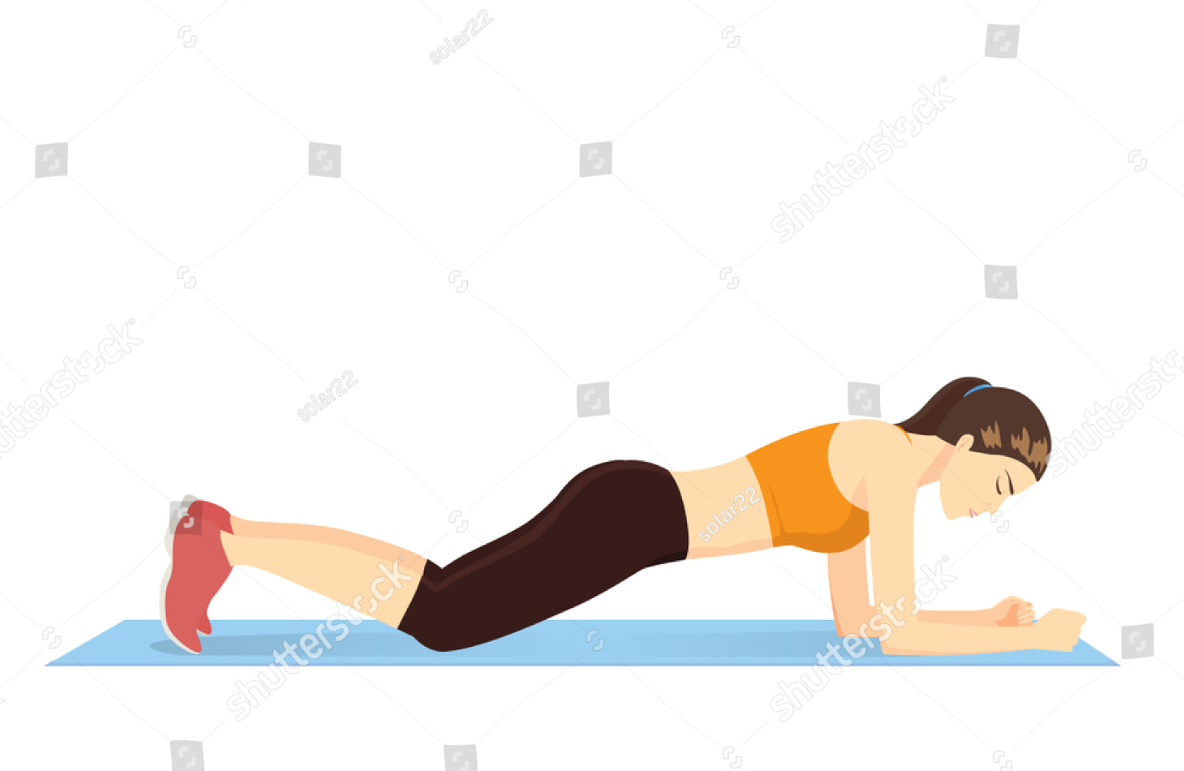
The knee plank is a simpler variation of the standard plank. Instead of balancing on your toes and forearms, you distribute your body weight on your knees, toes, and forearms. This significantly reduces the load on your core and back, making it accessible while still providing excellent muscle activation.
Benefits of the Knee Plank
Don’t underestimate the knee plank! It offers impressive benefits for your fitness:
- Stronger Abdominal Muscles: Engage your core effectively to build a solid foundation.
- Stronger Back Muscles: Support your spine and reduce the risk of injury.
- Reduced Low Back Pain: By strengthening your core and back, you can alleviate discomfort.
- Improved Posture: A stronger core naturally leads to better alignment and posture.
How to Perform the Knee Plank with Proper Form
Ready to give it a try? Follow these steps for a safe and effective knee plank:
- Set Up: Find a clear space and place an exercise mat on the floor.
- Starting Position: Lie on your stomach with your elbows directly beneath your shoulders.
- Engage: Engage your core and glute muscles. Keep your neck in a neutral, relaxed position.
- Lift Off: Press your forearms, knees, and toes into the ground. Slowly lift your torso off the floor, forming a straight line from your shoulders to your knees.
- Maintain Form: Keep your neck and spine in a neutral curve. Remember to tuck your pelvis slightly to prevent your hips from sagging or lifting too high.
- Hold: Hold this position for 5 deep breaths, or as long as you can maintain proper form.
Are you ready to start incorporating the knee plank into your fitness routine?