Table of Contents
Are you searching for a single, powerful exercise that can sculpt your midsection, boost your athletic performance, and improve your overall stability without needing any expensive equipment? Look no further than the Russian Twist. This dynamic, rotational movement is a cornerstone of effective core strength training, demanding both effort and balance to execute correctly.
Often touted as one of the best exercises for targeting the oblique muscles—the muscles running along the sides of your abdomen—the Russian Twist is an absolute game-changer for anyone serious about a flat, strong stomach. Athletes across virtually every sport rely on rotational exercises like this to generate power, but its benefits extend far beyond the gym, helping you with everything from improving your posture to reducing common back pain.
Ready to unleash the power of this classic move? This comprehensive guide will walk you through its history, delve into its incredible benefits, provide a detailed, step-by-step guide to perfect your form, and even suggest variations to keep your progress on an upward trajectory.
What is the Russian Twist and Why is it an Essential Core Exercise?
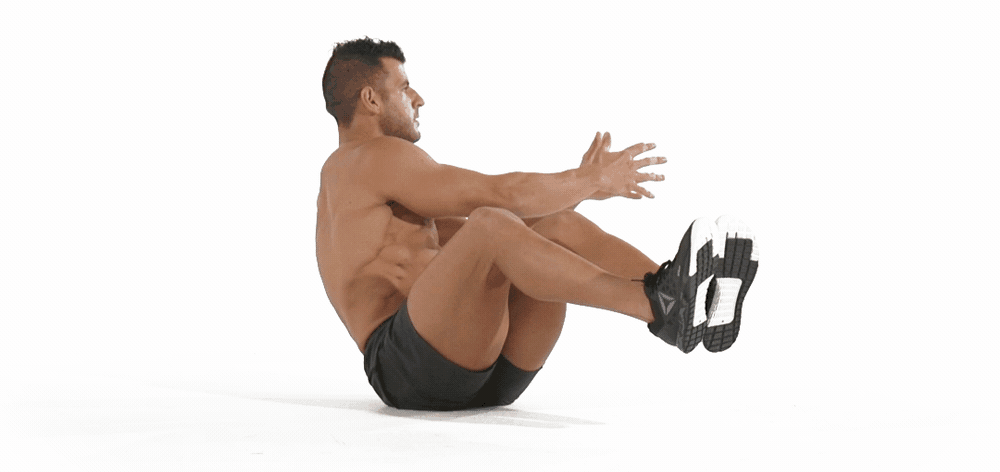
The Russian Twist is an abdominal exercise performed while seated, where you engage your core to rotate your torso from side to side. It’s fundamentally a rotational exercise, making it uniquely effective compared to static movements like planks or standard crunches.
A Twist of History
While its name suggests a rich military history, the Russian Twist did, in fact, gain widespread use among Russian soldiers during the era of the Cold War. Its initial purpose was functional: to help soldiers develop a robust and powerful midsection capable of withstanding the rigors of combat and improving full-body mobility. Today, its usefulness transcends military training; it’s utilized worldwide by bodybuilders, fitness enthusiasts, and athletes for its proven effectiveness in building a resilient and powerful core.
Muscles Targeted
The magic of the Russian Twist lies in its comprehensive muscle engagement. It doesn’t just work one muscle; it calls upon the entire core unit to maintain stability while the torso rotates.
- Primary Target: Obliques (Internal and External): These are the muscles on the sides of your abdomen, responsible for rotation and lateral flexion. Training them is crucial for a toned waistline and spinal protection.
- Secondary Target: Rectus Abdominis: The “six-pack” muscle, which works intensely to stabilize the trunk and prevent unwanted movement.
- Stabilizers: The hip flexors (psoas, iliacus) and muscles of the lower back (erector spinae) work constantly to keep your legs and torso elevated and stable throughout the movement.
By challenging your body’s ability to stabilize against a rotational force, the Russian Twist forces your core muscles to fire on all cylinders, leading to superior core strength gains.
The Transformative Benefits of Mastering the Russian Twist
Incorporating the Russian Twist into your regular routine offers a cascade of physical advantages. The rotational nature of the exercise provides specific benefits that traditional exercises simply can’t match.
- 1. Develop Explosive Core Strength and Stability
- The main benefit is the profound strength development in the entire midsection. Because the exercise requires you to hold a 45-degree V-sit position while rotating, your core muscles—especially the obliques—must work overtime to prevent you from losing balance and collapsing. This demanding stability challenge is what builds the kind of functional core strength that translates into real-world power.
- Achieve a Toned Waistline and Flat Stomach
- If your goal is a more defined physique, the Russian Twist is indispensable. By intensely engaging the oblique muscles, you can work toward toning your waistline and creating a stronger, tighter look. While no single exercise can “spot reduce” fat, building muscle mass through exercises like this increases your overall calorie expenditure, which is vital for burning fat and revealing a flatter, more sculpted stomach underneath.
- Improve Posture and Reduce Back Pain
- One of the most valuable benefits is the positive impact on spinal health. A weak core is often the root cause of poor posture and chronic lower back pain. When you strengthen the deep abdominal muscles and the back extensors simultaneously, you create a natural, supportive corset for your spine. The consistent engagement of the core muscles during the twist helps to maintain an upright, aligned torso, leading to significantly improved posture and, for many, a noticeable reduction in nagging back discomfort.
- Enhance Rotational Power for Athletes
- For individuals who participate in sports that involve twisting—such as golf, tennis, baseball, hockey, or throwing events—the Russian Twist is non-negotiable. It specifically trains the body’s ability to generate torque and rotational power. This rotational training mimics the dynamic movements of these sports, allowing you to hit harder, swing faster, and throw further.
- Boost Balance and Overall Stability
- The constant demand for balance while your feet are lifted is a huge benefit for your overall stability. This helps improve proprioception (your body’s sense of where it is in space) and makes you less susceptible to falls or injuries during sudden, dynamic movements in daily life. By consistently challenging your center of gravity, you create a more stable, resilient body.
- The constant demand for balance while your feet are lifted is a huge benefit for your overall stability. This helps improve proprioception (your body’s sense of where it is in space) and makes you less susceptible to falls or injuries during sudden, dynamic movements in daily life. By consistently challenging your center of gravity, you create a more stable, resilient body.
Step-by-Step Guide: How to Perform the Perfect Russian Twist
Perfect form is crucial for maximizing the benefits of the Russian Twist and, most importantly, protecting your lower back. Follow these steps meticulously to master this powerful exercise.
- The Setup and Starting Position
- Preparation: Find a clear area and place a yoga mat or cushioned surface on the floor.
- Seating: Sit on the floor with your knees bent and your feet flat on the ground.
- Torso Angle: Lean your torso back slightly, creating a 45-degree angle with the floor. This is where your core engagement begins. You should immediately feel your abdominal muscles tightening.
- Hand Position: Clasp your hands together, interweaving your fingers, and hold them out in front of your chest. This will serve as your weight anchor for the twist.
- Lift Off: Slowly lift both of your feet inches above the ground. Cross them at the ankles for added stability if needed. Your body should now resemble a shallow ‘V’ shape, balanced entirely on your tailbone.
- Executing the Rotational Movement
- Engage and Stabilize: Ensure your back is straight—avoid rounding your shoulders or slumping—and your abdominal muscles are tight. This straight, engaged torso is key to protecting your spine.
- The Twist (Side One): Slowly and deliberately twist your torso to the right side. Keep your lower body and legs as still as possible; the movement should come entirely from your waist and core.
- Exhale and Touch: As you twist, exhale fully. Try to touch the ground next to your right hip with your clasped hands, but only go as far as you can while maintaining perfect form.
- The Center Return: Return to the original center position, inhaling as you move back. Do not relax your core—maintain the V-sit position throughout the entire repetition.
- The Twist (Side Two): Immediately twist your torso to the left side, exhaling as you reach. Try to touch the ground next to your left hip.
- Full Repetition: Return to the center. Completing a twist to both the right and left sides counts as one full repetition.
Common Mistakes and How to Fix Them
To get the most out of your Russian Twist and prevent injury, be mindful of these common form errors:
| Common Mistake | How to Fix It (The Core Focus) |
|---|---|
| Rounding the Back | Engage the Core: Focus on maintaining a straight line from your head to your hips. Think of pulling your belly button toward your spine. If you can’t maintain a straight back, put your feet down until your core strength improves. |
| Swinging the Arms | Twist from the Torso: The hands are simply extensions of your torso. The power and movement must come from your obliques, not momentum from your arms. Move slowly and deliberately. |
| Dropping the Feet | Lower the Angle: If your feet drop or your hips shift excessively, your torso angle is likely too aggressive. Sit up slightly (less than 45 degrees) to find a position where your core can stabilize your legs. |
| Holding Your Breath | Control the Breath: Synchronize your breath with the movement: Exhale during the effort (the twist) and Inhale when returning to the center. |
Elevating Your Russian Twist: Variations and Progression
Once you’ve mastered the basic bodyweight Russian Twist, you can easily modify it to continue building core strength and rotational power.
Beginner Modification: Feet Down
If you struggle with balance or have lower back discomfort, keep your feet flat on the floor throughout the entire movement. This provides a solid base of support, allowing you to focus purely on the rotational aspect and proper core engagement before progressing to the feet-lifted standard position.
Advanced Progression: Weighted Russian Twist
To increase the intensity, simply add resistance.
- Weighted Object: Hold a dumbbell, kettlebell, or a medicine ball with both hands.
- Execution: Maintain the exact same form—torso at 45 degrees, feet lifted (if possible)—but now you must control the added weight during the twist. This places a significantly higher demand on your obliques and rectus abdominis, leading to rapid increases in strength and toning.
Programming the Russian Twist
Aim to perform 3 to 4 sets of the Russian Twist in your workout routine, ideally on non-consecutive days to allow your core muscles to recover.
- Reps/Time: Perform 10-15 repetitions per side (20-30 total twists) or set a timer for 45-60 seconds of continuous, controlled twisting.
Integrate the Twist for a Powerful Core
The Russian Twist is more than just a great ab exercise; it’s a functional movement that builds a truly resilient and powerful foundation for your entire body. By consistently challenging your core muscles and focusing on perfect form, you will not only achieve a more toned waistline but also gain the kind of stability and rotational power essential for peak performance in athletics and daily life. Start incorporating this simple, no-equipment exercise today and feel the difference a strong core can make!
Also check out for other core excercise: