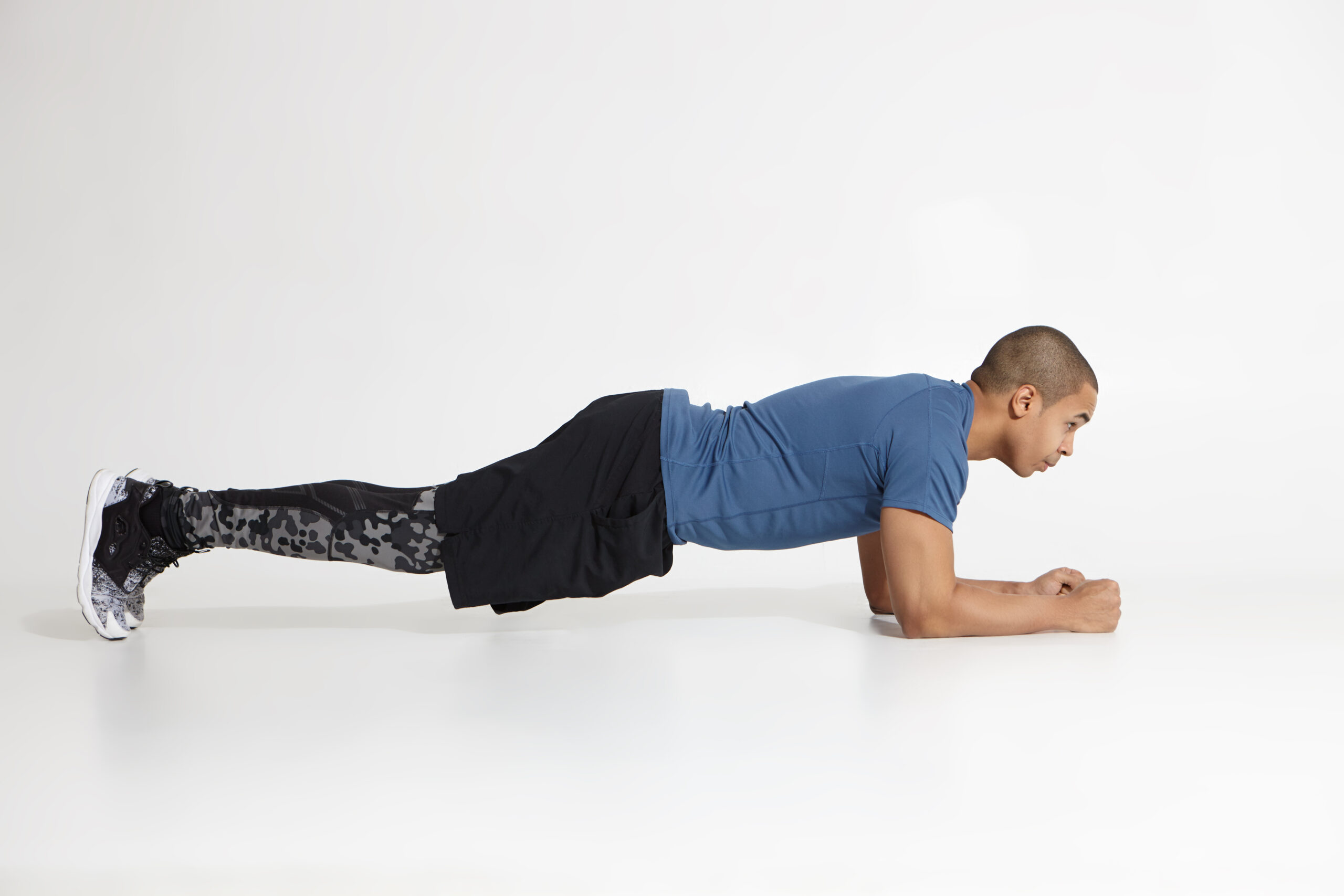
The plank is a powerhouse exercise, building core strength, improving posture, and boosting overall stability. But getting the form right is crucial to reap its full benefits and avoid injury.
Step-by-Step Plank Instructions
- Set Up Your Base: Begin by lying face down on a mat. Ensure your body is straight, with your legs extended behind you.
- Engage Your Upper Body: Place your forearms and elbows on the ground, directly beneath your shoulders. Your palms should be flat on the mat or your hands can be clasped together. Keep your neck neutral, looking down at the mat.
- Lift and Align: Slowly raise your entire body off the mat, supporting your weight on your forearms, elbows, and toes. As you lift, tighten your core muscles – imagine pulling your belly button towards your spine.
- Achieve Perfect Form: Once in position, focus on creating a straight line from your head to your heels. Avoid letting your hips sag or pike up too high. Your head, shoulders, torso, and toes should all be in alignment.
- Hold and Breathe: Maintain this rigid, straight-line position. Breathe deeply and consistently throughout your plank.
Why Perfect Plank Form Matters
Proper plank form is essential for:
- Maximizing Core Engagement: Effectively targets your abs, obliques, and lower back.
- Preventing Injury: Reduces strain on your spine and joints.
- Improving Posture: Strengthens the muscles that support a healthy posture.
- Boosting Full-Body Stability: Engages muscles from your shoulders to your glutes.
- Reduces the risk of back pain: Planks help you to form correct posture and result in decreased back pain.
Ready to incorporate the plank into your fitness routine? Start with shorter holds and gradually increase your time as your strength improves!